
A community of Columbia faculty, staff, students, alumni, and friends focused on excellence in teaching, learning, and research. Sign up for our newsletter.
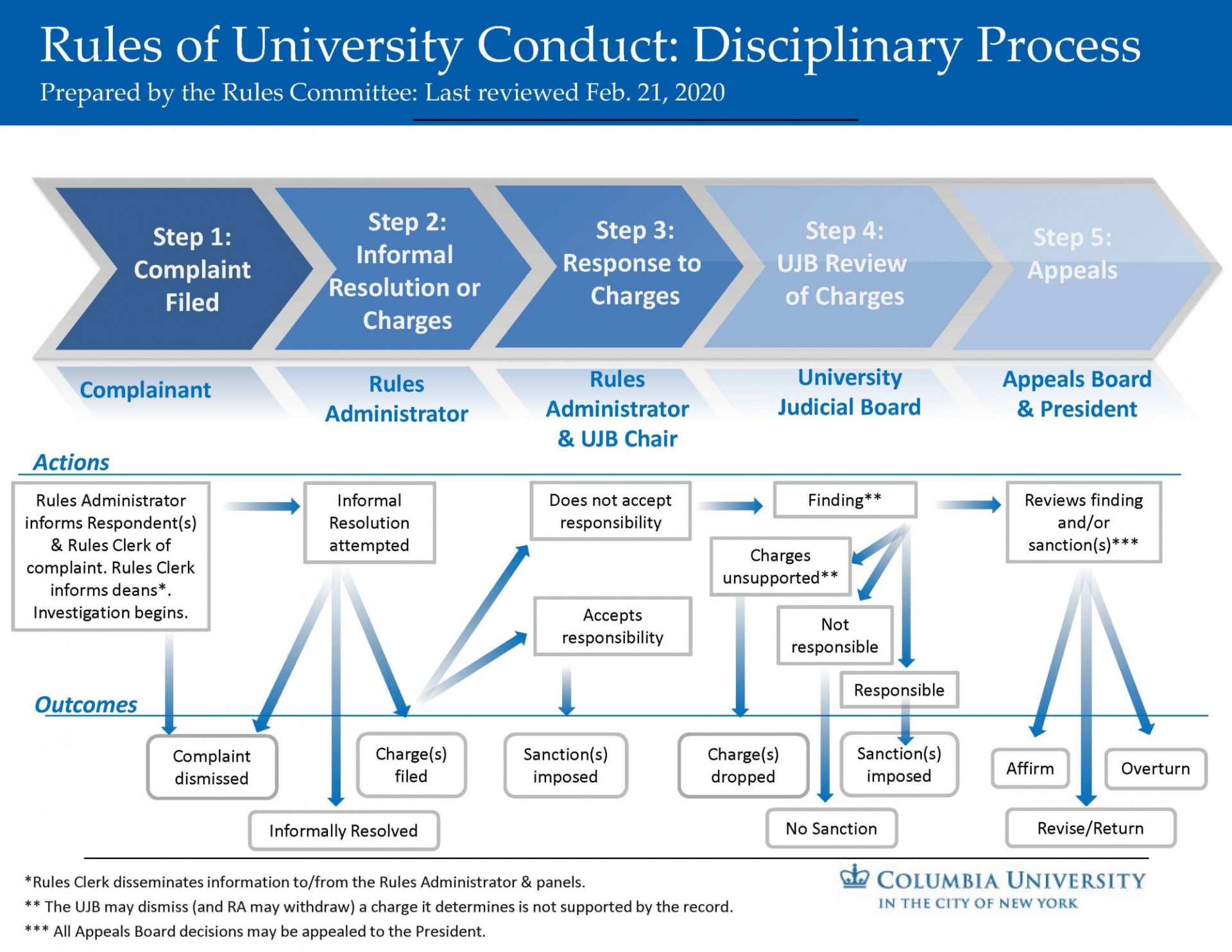
ICYMI: We’ve published an “explainer” that attempts to shed light on Columbia’s complex disciplinary processes (note: this is a very comprehensive explanation – 15 pages in total).
Next Thursday, October 31, 2024, will be Columbia University’s 270th Charter Day. It was on this day in 1754 that King’s College in the Province of New York in America was issued its royal charter. It is, in effect, our alma mater’s birthday.
So what is a charter? A charter is a legal document issued by a sovereign authority that establishes a corporation. A corporation is a legal entity that of its own accord can enter into contracts, sue and be sued, bind its members to governance mechanisms, own property, and the like. Blackstone has identified the earliest corporations as Roman societies of trade and professions called… universitas or collegia. Today, most corporations in the United States are chartered in Delaware, specifically by the Delaware Secretary of State.
Columbia University has an elaborate system of internal governance that some have suggested (incorrectly) is akin to a political entity, with structures that bear superficial similarity to legislatures, courts, and written constitutions. In reality, Columbia University is a private nonprofit corporation that is overseen by a Board of Trustees. Contrary to popular misconceptions, members of our community are not “citizens” with inherent rights but rather “employees” (in the case of faculty and staff) and “customers” (in the case of students), whose relationship with the corporation is contractual. The elaborate structures outlined earlier are voluntary delegations of power by the Board of Trustees, which holds ultimate power over the affairs of the University, in recognition of the special customs and traditions that historically have allowed universities to thrive but have been shown by recent events to suffer from certain shortcomings. For a detailed explanation of how Columbia’s disciplinary mechanisms work in the context of a corporation, please refer to our explainer here.
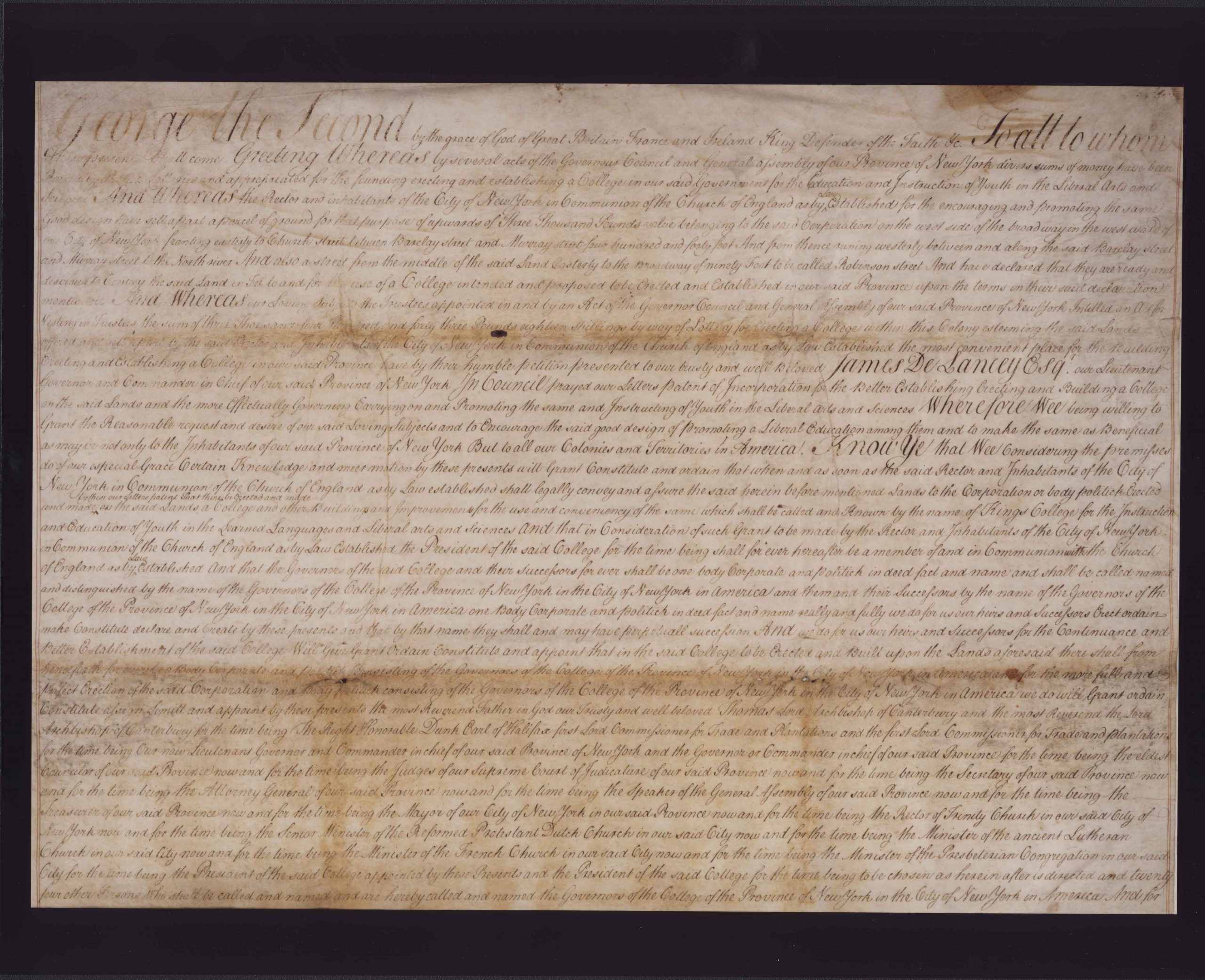
Columbia has operated under four charters since 1754. They are:
(In assembling together this historical material, we are deeply indebted to our dear friend Professor Emeritus Robert McCaughey and his Columbiana collection.)
The 1754 Charter of King’s College in the Province of New York in America. This was the result of a contested founding between different factions over which religious denomination King’s College would ascribe to. The Charter provided for “the instruction and education of youth in the learned languages, and liberal arts and sciences” and established a Board of Governors. It also imposed a religious test, requiring the President to be a member of the Church of England. Interestingly enough, King George II had nothing to do with the charter (and was only made aware of it after the fact); rather, it was issued in his name by the Lieutenant Governor of New York, James de Lancey. A high-resolution scan of the original Royal Charter is available here at the University Archives.
The 1784 Charter of Columbia College of the State of New York. King’s College shut down in 1776 as a result of the American Revolution. After the Revolution, the remaining governors petitioned to “reboot” King’s College with the Board of Governors renamed as the Board of Regents. None other than John Jay later served as Chancellor of the Regents (the equivalent of Chair of the Trustees). This charter didn’t just restart King’s College as Columbia College. Rather, it designated Columbia College as the “mother university” of the state of New York, from which other institutions of higher education would receive accreditation. Among other provisions, it removed the religious test requirement and limited any fines on misconduct to the “value of one bushel of wheat”. There are some echoes of this charter that persist to the present day: the University of the State of New York (New York State’s higher education governing authority, not to be confused with the State University of New York) is overseen by a “Board of Regents” (hence the “Regents Exam”) and counts its founding date as… 1784. The 1784 Charter ultimately failed, allegedly because the Charter required two Regents to be from every county in New York, and many upstate Regents would usually neglect to make the journey to attend meetings, denying the Board a quorum.

The 1787 Charter of Columbia College in the City of New York. After it was clear the 1784 Charter wasn’t working, none other than Alexander Hamilton petitioned the New York Assembly to issue another charter that re-established Columbia as a private corporation under (close to) its present name: The Trustees of Columbia College in the City of New York. It no longer requires Columbia to oversee other colleges and universities in the state. It also charges the Board of Trustees to be self-perpetuating and fixes the size of the Board at twenty-four, which persists to today. As another point of historical interest, it specifically names both Alexander Hamilton and Gershom Seixas, Columbia’s first Jewish Trustee (after whom Columbia Barnard Hillel’s annual award is named), to the board.
The 1810 Charter of Columbia College the the City of New York. The 1787 Charter still contained “certain restrictions and defects” so in 1810 the New York State Assembly issued yet another charter. This charter is the one we still operate under. The principal change to this charter is that it enabled the Trustees a freer hand in the acquisition and disposition of real estate, and that it specifically disqualified faculty from serving as Trustees. And speaking of real estate, the charter also names Gouverneur Morris (KC 1768, 1771) as a Trustee who was responsible for New York City’s street grid. The name of the Corporation was legally changed to Columbia University in the City of New York by court order on July 17, 1912, although the name was informally used as early as March 25, 1896.
You can still see architectural vestiges of these different charters today on Butler Library and Hamilton Hall. The front facade immediately above the entrance of both buildings shows the three historical seals (and names) by which Columbia was known: King’s College, University of the State of New York, and Columbia College.


In 1987, Columbia College celebrated the Bicentennial of the 1787 Charter in a novel way. Our dear friend Professor Emeritus of Biology Robert Pollack CC ‘61, then the Dean of Columbia College, worked with alumni to arrange the chartering of a #1 IRT subway train that picked up celebrants at the 116th Street Station, and then went without a stop directly to the Wall Street Station, so that celebrants could visit Federal Hall to honor the signing of the charter. Fortunately, recalls Pollack, “This Dean had wisely thought to bring sufficient tokens so that everyone could return in the regular way afterward… It was indeed a wonderful trip, and I suspect it is a very useful reminder of what Columbia can be.”
Happy birthday, Columbia!
News Roundup
– October 24, 2024. The Columbia Spectator writes that this past Tuesday, over 200 affiliates signed a petition in support of the University Senate amidst concerns about its governance. This recent petition was a reaction to a previous petition from October 15 that vocalized concern over the possible reelection of the University Senate chair, Jeanine D’Armiento. One of the writers of the recent Tuesday petition, Katherine Franke, BC ’81, James L. Dohr professor of law, shared it with the Columbia faculty action committee as well as the Arts and Sciences town hall committee discussion group. It expresses concern that the earlier petition from October 15 is trying to “undermine” the senate’s current procedures to shift its internal governance structure, even though the senate has apparently already been weighing an amendment that would “clarify the application of those existing term limits.” The October 15 petition says that leadership of the senate, among them D’Armiento, have failed to act in a fair “manner towards all Senators” and asks for a “review of committee representation, instituting whistleblower policies, establishing a code of ethics and conflict of interest policy, increasing transparency of compensation for senators, and requiring the publication of nonconfidential committee hearings and senate hearings.”
– October 24, 2024. The Guardian reports that professors at various American universities are potentially going to face disciplinary action for their vocal support of Palestine and pro-Palestinian protesters. At Columbia, Law School professor Katherine Franke, director of the Center for Gender and Sexuality at the Law School, is being investigated because of an interview she participated in this year. She has shared her concerns about Israeli students coming to study at Columbia: “Columbia has a program with older students from other countries, including Israel. It’s something that many of us were concerned about because so many of those Israeli students who then come to the campus are coming right out of their military service. And they’ve been known to harass Palestinian and other students on our campus, and it’s something the university has not taken seriously in the past.” She recently reported that she’d filed a complaint against her former law firm for dropping her as a client. At Princeton, Ruha Benjamin is being investigated by Princeton for her activism in support of Palestine, while the university celebrates her MacArthur genius grant.
– October 24, 2024. Archinect.com shares that Columbia Graduate School of Architecture, Planning and Preservation (GSAPP) has shared information about its new temporary installation in Avery Plaza. Created by students, Cloud is the culmination of a year-long seminar taught by professors Laurie Hawkinson and Galia Solomonoff. The installation is “made of metallic foam fabricated by a Spanish manufacturer called Àrea Cúbica and ‘envisions a participatory experience that emphasizes the interconnectedness of peoples’ actions in shared spaces.’”
– October 23, 2024. The Spectator published an article about new Title VI discrimination and harassment training issued to all Columbia employees surrounding the topic of “Fairness and Equal Opportunity at Columbia: Columbia’s Institutional Commitment to Protecting Individual Rights”—to make sure Columbia stays in compliance with Title VI of the Civil Rights Act of 1964, which endeavors to shield against discrimination based on nationality, race, or color. According to an email for all Columbia employees from the Vice Provost, these training sessions are part of “ongoing efforts to cultivate a campus environment free from discrimination and harassment.” The training includes examples of conduct that could violate Title VI, what the reporting process looks like, and what a “hostile environment” means in practice.
– October 23, 2024. This week, the Attorney Generals of Arkansas and South Carolina (along with attorney generals from 23 US states) released a letter to President Armstrong sharing their concerns over the antisemitism on Columbia campus and encouraging Columbia to refrain from divesting from Israel. They wrote in the letter, “This issue is a matter of special concern to the states because students from across the country attend Columbia University.” They offered some warm words, writing that “we commend Columbia University for its decision earlier this year to not divest from Israel. And we urge your administration to continue to maintain that position despite blatantly antisemitic pressure from some pro-Palestinian student groups.”
– October 23, 2024. On Wednesday, the 1636 Forum—a community of 20,000 Harvard alumni dedicated to the same principles as Stand Columbia—released a report on the State of Harvard Business School, focused on challenges to free speech and academic excellence at HBS. The 1636 Forum says the report is the only known report on free speech issues at any business school. Anyone can access the report easily through this Docsend link. We encourage you to read it, as it aptly highlights many of the issues discussed in this newsletter, in a new and interesting context.
– October 22, 2024. Liza Libes published a very interesting op-ed this week on why she’s proud to not be a PhD student in Literature. As an undergraduate at Columbia, the literature professors did much to extinguish her interest in pursuing academia, her original plan. She recalls receiving a C on her first English paper, only because the professor told her, “It is incorrect to argue that a patriarchal structure can benefit society’s women,” after she wrote about women in The Iliad seeking solace in their male counterparts. The next time, she took the hint and wrote about the subversion of gender roles in another book, only to receive an A. Her frustration grew as she noted the elevation of themes and ideology versus real substantive study of the texts: “with parents from the USSR who had suffered under socialism—it bothered me that Karl Marx seemed to feature on my English syllabi more frequently than Shakespeare or Milton.” She ultimately abandoned her dream of receiving a literature PhD after coming to an unavoidable conclusion: “literature was open to interpretation, but only if the interpretation said something clever about oppression, societal injustice, or gender theory. I had figured out the themes I needed to use to succeed in literary study, but I was no longer studying literature.”
– October 17, 2024. Columbia Spectator asked various contributors to weigh in on the question of whether Columbia should adopt institutional neutrality. On September 11, Barnard’s President Laura Rosenbury stated that Barnard would take a step towards institutional neutrality and hold back from sharing official views on “matters of public concern except to offer sentiments of support for those who are directly affected or grieving.” This formalized the “interim” version of the policy Barnard had adopted previously. In the wake of this announcement, on September 17, President Armstrong sent an email sharing that she would set up an advisory committee to investigate whether or not Columbia should adopt a similar policy to Barnard’s.